
The best fermented foods for gut health are plain yogurt (dahi) and kefir with live cultures, raw refrigerated sauerkraut, kimchi, brine pickles, unpasteurised miso and kombucha. Have 1–3 small servings a day, choose versions that are plain, refrigerated and labelled “live and active cultures”, and pair them with fibre. The common yogurt mistake is buying sweetened or heat-treated products, which bring sugar but few or no live microbes.
- The U.S. Dietary Guidelines 2025–2030 name sauerkraut, kimchi, kefir and miso among foods that support a diverse microbiome.
- In a 10-week Stanford trial, a diet high in fermented foods increased gut microbe diversity and lowered 19 blood markers of inflammation.
- Fermented does not always mean live: baking, canning and pasteurising after fermentation kill the microbes.
- The “Live & Active Cultures” seal means at least 100 million cultures per gram at the time of manufacture.
- Salty ferments (kimchi, miso, pickles) count towards the WHO limit of 2,000 mg sodium a day.
- For most healthy people, food comes before probiotic supplements.
Your gut is home to trillions of microbes, and what you eat decides which ones thrive. Fibre feeds the helpful bacteria already living there; fermented foods go a step further by delivering new live microbes, plus acids and compounds made during fermentation. But not every jar or tub on the shelf does this job. This guide ranks the best fermented foods for gut health, explains the yogurt label mistake most shoppers make, and includes a free calculator so you can score your own week in under a minute.
Best Fermented Foods for Gut Health: The Short List
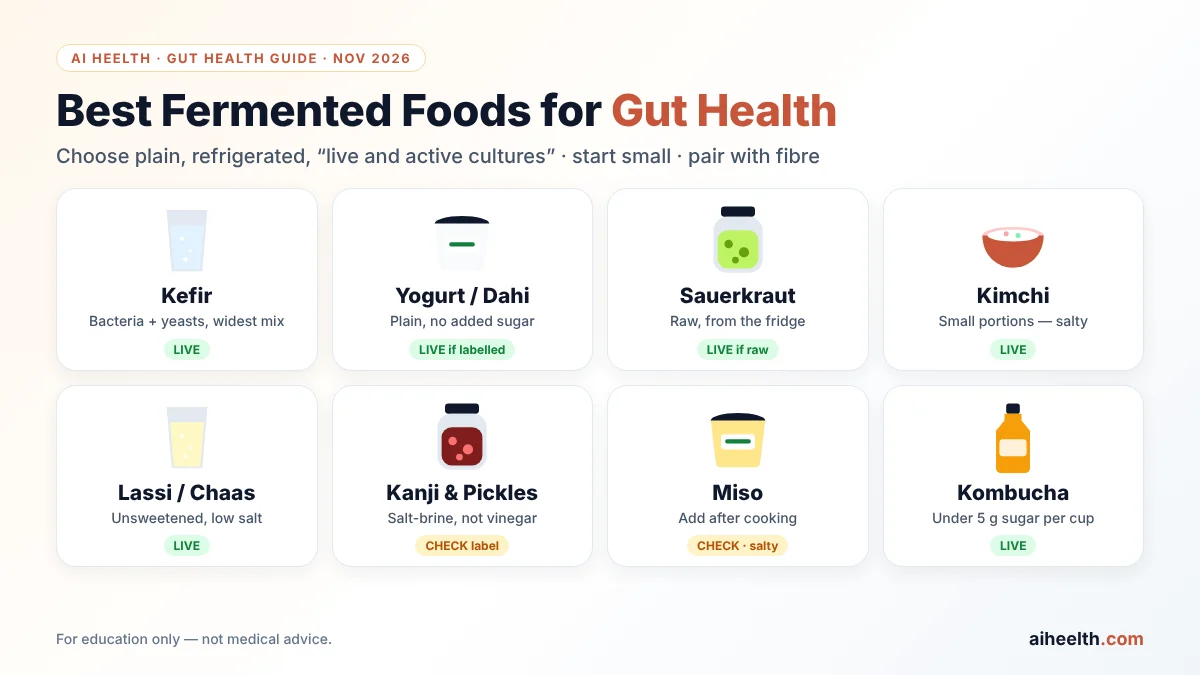
If you only remember one list, make it this one. These foods usually contain live microbes when you buy the right version:
- Kefir — a tangy fermented milk drink made with a mix of bacteria and yeasts; usually a broader mix than yogurt.
- Plain yogurt or dahi — the easiest daily option; look for “live and active cultures”.
- Unsweetened lassi or chaas — a traditional way to enjoy live dahi cultures; keep salt and sugar low.
- Raw sauerkraut — fermented cabbage from the fridge section, not the canned shelf.
- Kimchi — spicy fermented cabbage and radish; small portions because of salt.
- Brine-fermented pickles and kanji — fermented in salt water, not vinegar.
- Unpasteurised miso — stir it in after cooking so the heat does not kill the microbes.
- Kombucha — fermented tea; choose low-sugar brands and treat it as an extra, not the main source.
Fermented foods that are cooked or baked — tempeh, idli, dosa and sourdough bread — are still nutritious and often easier to digest, but the heat means they no longer carry live microbes.
What Are Fermented Foods?
Fermented foods are foods made through the controlled growth of microbes, which convert sugars and starches into acids, gases or alcohol. That process gives yogurt its tang and kimchi its fizz, helps preserve the food, and can create new nutrients and bioactive compounds. People across South Asia have relied on it for centuries — think dahi, lassi, kanji and idli batter.
What Is the Difference Between Probiotics, Prebiotics and Postbiotics?
These three words are often mixed up. Think of your gut as a garden: probiotics are new seeds, prebiotics are the fertiliser that feeds the plants, and postbiotics are the useful things the garden produces. You get the best results when all three work together — which is why fermented foods and fibre belong on the same plate.
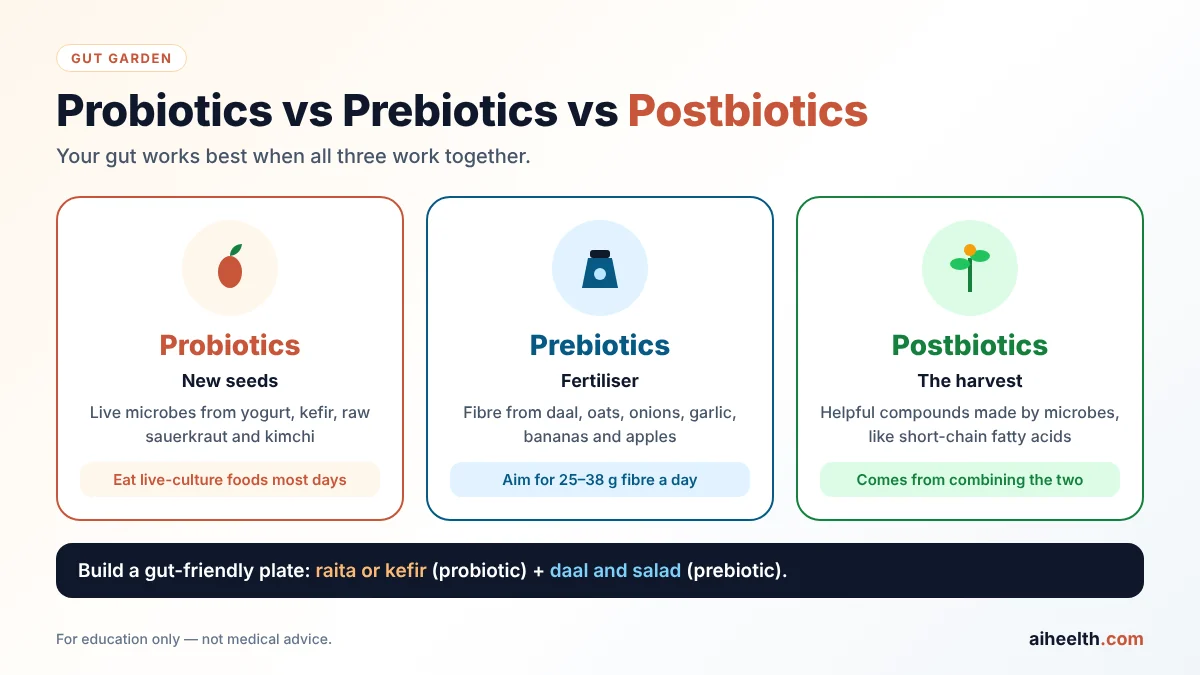
| Probiotics | Prebiotics | Postbiotics | |
|---|---|---|---|
| What they are | Live microbes that give a proven health benefit in the right amount | Fibres and compounds that gut microbes feed on | Inactivated microbes or their parts and products that benefit health |
| Where you find them | Some yogurts, kefir and supplements with named, tested strains | Onions, garlic, oats, daal, chickpeas, bananas, apples | Many fermented foods, and produced in your own gut from fibre |
| Simple picture | New seeds | Fertiliser | The harvest |
| Everyday tip | Eat live-culture foods most days | Aim for 25–38 g fibre a day | Comes naturally when you combine the two |
Strictly speaking, a “probiotic” must be a defined strain with tested benefits. Most fermented foods are best called “foods with live cultures”.
Video: best fermented foods for gut health and the yogurt mistake to avoid — AI Heelth.
Fermented Foods Compared: Live Cultures, Salt and Sugar
This table compares common fermented foods on what matters most for your gut and your heart: whether the microbes are still alive, how much sodium a typical portion adds, and what to watch out for. Sodium values are typical figures from USDA FoodData Central; brands vary, so check the label.
| Food | Typical serving | Live microbes? | Sodium (approx.) | Best for | Watch out for |
|---|---|---|---|---|---|
| Kefir (plain) | 1 cup (240 ml) | Yes | ~100–125 mg | Widest mix of microbes; protein and calcium | Flavoured kefirs with added sugar |
| Yogurt / dahi (plain) | ¾ cup (170 g) | Yes, if labelled | ~80–120 mg | Easy daily habit; lactose is easier to digest | Sweetened, heat-treated or shelf-stable tubs |
| Lassi / chaas (unsweetened) | 1 glass (240 ml) | Yes | ~100 mg (more if salted) | Cooling drink with meals | Added salt or sugar; mango lassi is a dessert |
| Raw sauerkraut | ¼ cup (35 g) | Yes, if refrigerated | ~200–250 mg | Live microbes plus a little fibre | Canned or pasteurised jars |
| Kimchi | ½ cup (75 g) | Yes | ~350–500 mg | Variety of microbes and vegetables | Salt — keep portions small |
| Brine pickles / kanji | 1 spear or 1 glass | Only if brine-fermented | ~250–500 mg | Traditional, low-calorie ferment | Vinegar pickles and oily achar are not live |
| Miso (unpasteurised) | 1 tbsp (17 g) | Yes, if not boiled | ~600–650 mg | Flavour boost for soups and dressings | Very salty; add after cooking |
| Aged cheese | 1 slice (28 g) | Some | ~170–200 mg | Protein and calcium | Salt, saturated fat, tyramine |
| Kombucha | 1 cup (240 ml) | Yes | ~10 mg | Lower-calorie swap for soft drinks | 2–8 g sugar per cup; traces of alcohol |
| Tempeh, natto | 3 oz (85 g) | Natto yes; tempeh is cooked | ~5–15 mg | Plant protein and fibre | Natto is very high in vitamin K (warfarin) |
| Idli, dosa, sourdough | 1 serving | No — cooked | varies | Easier-to-digest grains | Do not count them as live-culture foods |
Sources: USDA FoodData Central; product labels. “Live” depends on processing — the label is the final word.
What Does the Science Say About Fermented Foods?
The evidence is promising and growing, though still smaller than for fibre. Three findings stand out:
- More microbial diversity, less inflammation. In a 2021 Stanford trial published in Cell, 36 healthy adults were assigned either a high-fibre or a high-fermented-food diet for 10 weeks. The fermented-food group worked up towards about six small servings a day; their gut microbe diversity rose and 19 inflammatory proteins in the blood went down. The high-fibre group did not show the same change over that period.
- Official dietary guidance now names fermented foods. The 2025–2030 Dietary Guidelines for Americans, released in January 2026, list fermented foods such as sauerkraut, kimchi, kefir and miso — along with vegetables, fruits and high-fibre foods — as supporting a diverse microbiome.
- Yogurt and blood sugar. In March 2024 the U.S. FDA allowed a qualified health claim that eating at least 2 cups (3 servings) of yogurt a week may reduce the risk of type 2 diabetes, while noting the evidence is limited. If you are working on your sugar levels, see our guide to lowering HbA1c.
What science does not show: that fermented foods cure digestive disease, that more is always better, or that one “super” food beats variety. Think of fermented foods as a daily habit that supports a healthy gut — alongside fibre, sleep and movement.
Fermented Food Gut Score Calculator
Use this free calculator to score your last week of fermented foods out of 100. It counts your live-culture servings, rewards variety, flags hidden salt and sugar, adds safety notes for common medicines and conditions, and builds a 4-week plan. The second tab checks any yogurt or kefir label for the yogurt mistake.
Fermented Food Gut Score Calculator
Score your weekly fermented foods, see the hidden salt and sugar, and check any yogurt label in 10 seconds. Free and private — nothing leaves your device.
Tick anything that applies — it changes your safety notes:
LIVE usually contains live microbes CHECK only if the label says raw/live NO LIVE fermented, but heat kills the microbes
No “added sugars” line? Plain yogurt has about 4–5 g of natural milk sugar per 100 g, so subtract that from “total sugars” for a rough estimate.
What Is the Yogurt Mistake?
The yogurt mistake is buying a product that looks healthy but delivers few or no live microbes, or so much added sugar that it cancels out the benefit. Many fruit yogurts carry 10–15 g of added sugar per tub — around three teaspoons — and some are heat-treated after culturing, which kills the cultures. The same traps apply to other fermented foods.
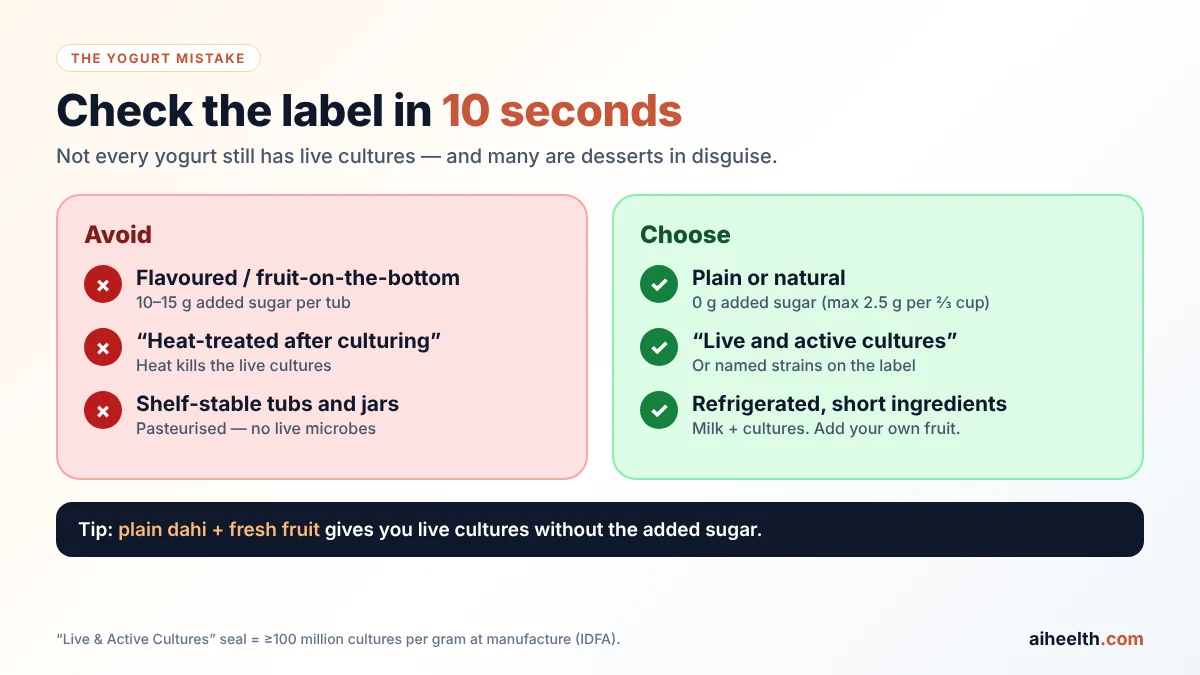
| Trap | Why it matters | Buy this instead |
|---|---|---|
| Flavoured or “fruit on the bottom” yogurt | Often 10–15 g added sugar per serving | Plain yogurt or dahi; add fresh fruit yourself |
| “Heat-treated after culturing” | Heating kills the live cultures | Refrigerated yogurt that states live and active cultures |
| Shelf-stable sauerkraut and pickles | Canning and pasteurising kill microbes | Fridge-section jars labelled “raw”, “unpasteurised” or “naturally fermented” |
| Vinegar pickles and oily achar | Sour from vinegar, not from fermentation | Salt-brine pickles or homemade kanji |
| Sweet lassi and sugary kombucha | Can rival a soft drink in sugar | Unsweetened lassi or chaas; kombucha with under 5 g sugar per cup |
How to read a yogurt label in 10 seconds
- Plain first. Choose “plain” or “natural” with no added sugars — ideally 0 g, and no more than 2.5 g per ⅔ cup.
- Find the cultures. Look for “live and active cultures”, the LAC seal, or named strains such as L. acidophilus or Bifidobacterium.
- Check the section. Live yogurt is sold refrigerated. Skip anything that says “heat-treated after culturing”.
- Short ingredients. Milk and cultures is all you need. Thickeners and sweeteners are signs of a processed product.
- Bonus for over-50s: strained (Greek-style) yogurt has about twice the protein — helpful for muscle. See how much protein you need.
How Much Fermented Food Should You Eat Per Day?
There is no official daily target yet. A practical, evidence-informed goal for most healthy adults is 1–3 small servings a day from at least two or three different foods. The Stanford trial used up to about six servings a day, but participants built up slowly over four weeks. Start where you are, and let comfort guide you.
| Food | One serving | Easy way to eat it |
|---|---|---|
| Yogurt / dahi | ¾ cup (about 170 g) | With lunch, or as raita with daal and rice |
| Kefir | 1 cup (240 ml) | In a smoothie or on its own at breakfast |
| Lassi / chaas | 1 glass (240 ml) | Unsweetened, with a pinch of roasted cumin |
| Sauerkraut / kimchi | 2–4 tablespoons | As a side with eggs, salads or rice bowls |
| Miso | 1 tablespoon | Stirred into soup after it comes off the heat |
| Kombucha | ½–1 cup | In place of a soft drink, not with every meal |
4-Week Fermented Food Starter Plan
Adding many new microbes at once can cause gas and bloating while your gut adjusts. This “start low, go slow” plan keeps it comfortable:
| Week | Daily goal | Example |
|---|---|---|
| Week 1 | 2–3 tablespoons, once a day | 3 tbsp plain dahi with lunch |
| Week 2 | 1 small serving a day | ½ cup yogurt or ½ glass kefir |
| Week 3 | 1–2 servings a day; add a vegetable ferment 3 times a week | Kefir at breakfast + 2 tbsp sauerkraut with dinner |
| Week 4 onwards | 2–3 servings a day from 3–4 different foods | Dahi, kefir, kimchi and kanji across the week |
Pair every step with fibre — daal, chickpeas, oats, vegetables and fruit — so the new microbes have food to grow on. Our guide on how to improve gut health covers fibre in detail.
Fermented Foods After 50: What Changes?
Gut microbe diversity tends to fall with age, digestion can slow, and more people take regular medicines. That makes fermented foods useful after 50 — with a few adjustments:
- Protein matters more. Greek-style yogurt and kefir support muscle as well as the gut.
- Mind the salt. Kimchi, miso, pickles and salted lassi add up quickly. If you manage your blood pressure, keep these to small portions — see our guide to high blood pressure.
- Lactose is easier in fermented form. The live cultures in yogurt and kefir help break down lactose, so many people with lactose intolerance tolerate them better than milk.
- Check your medicines. Some drugs interact with fermented foods (see the next section).
- After antibiotics, plain yogurt and kefir are a gentle way to support recovery — ask your doctor whether a specific probiotic is worthwhile for you.
Who Should Be Careful With Fermented Foods?
Talk to your doctor, pharmacist or dietitian first if you:
- Have a weakened immune system (chemotherapy, organ transplant, high-dose steroids). Rare infections from live microbes have been reported; avoid unpasteurised and home-fermented foods unless your care team approves.
- Take an MAOI antidepressant or linezolid. Aged cheese, sauerkraut, kimchi, miso and soy sauce can be high in tyramine and may cause a dangerous spike in blood pressure.
- Take warfarin. Natto is extremely high in vitamin K and can reduce warfarin’s effect.
- Have histamine intolerance. Aged and long-fermented foods are rich in histamine and may trigger headaches, flushing or hives.
- Must limit salt because of high blood pressure, heart failure or kidney disease.
- Are pregnant. Choose pasteurised dairy; avoid raw-milk products and home-brewed or unpasteurised kombucha.
- Have IBS or SIBO. Some people tolerate small portions well; others do not. Test one food at a time.
Making ferments at home? Use clean jars, keep vegetables fully under the brine, refrigerate once fermented, and throw away anything with fuzzy mould, a slimy texture or an off smell. When in doubt, throw it out.
Do You Need Probiotic Supplements?
For most healthy people, no — food comes first. Fermented foods bring live microbes together with protein, calcium, fibre and flavour, and they are hard to overdo when eaten in normal portions. Probiotic supplements are sold as dietary supplements, so in many countries — including the U.S. — they do not need to prove they work before going on sale, and strains and doses vary widely between brands.
Supplements can be useful in specific situations — for example, some strains may lower the risk of diarrhoea linked to antibiotics. Because benefits are strain-specific, choose one with your doctor rather than on your own. The American Gastroenterological Association recommends probiotics for only a handful of digestive conditions.
When Should You See a Doctor?
Seek medical advice promptly if you notice:
- Blood in your stool or black, tarry stools
- Unexplained weight loss or loss of appetite
- A lasting change in bowel habits, especially after age 50
- Severe or persistent abdominal pain, vomiting or fever
- Difficulty swallowing or anaemia
These are not caused by eating fermented foods, but they should not be self-treated with diet changes.
Key Takeaways
- The best fermented foods for gut health are kefir, plain yogurt or dahi, raw sauerkraut, kimchi, brine pickles, unpasteurised miso and low-sugar kombucha.
- Fermented is not always live: heat, canning and pasteurising kill the microbes.
- Avoid the yogurt mistake — buy plain, refrigerated products that state live and active cultures, with little or no added sugar.
- Aim for 1–3 small servings a day from several foods, build up slowly, and pair them with fibre.
- Watch the salt in kimchi, miso and pickles, especially if you manage blood pressure.
- Food comes before supplements for most people; check with your doctor if you have a weak immune system or take MAOIs or warfarin.
Frequently Asked Questions About Fermented Foods
What are the best fermented foods for gut health?
Kefir, plain yogurt or dahi with live cultures, raw refrigerated sauerkraut, kimchi, brine-fermented pickles, unpasteurised miso and low-sugar kombucha. Eating a variety gives your gut a wider range of microbes.
What is the yogurt mistake?
It is choosing yogurt that is sweetened, heat-treated after culturing or shelf-stable. These products contain added sugar and few or no live cultures. Choose plain, refrigerated yogurt labelled “live and active cultures” and add your own fruit.
Which is better for gut health, kefir or yogurt?
Both are good. Kefir is fermented with both bacteria and yeasts, so it usually contains a broader mix of microbes than yogurt. Yogurt is easier to find and very versatile. Many people enjoy both.
How much fermented food should I eat per day?
There is no official target. Most healthy adults can aim for 1–3 small servings a day from two or three different foods, building up slowly over a few weeks to avoid gas and bloating.
Is store-bought sauerkraut good for your gut?
Only if it is sold in the refrigerated section and labelled raw, unpasteurised or naturally fermented. Canned or shelf-stable sauerkraut has been heated, which kills the live microbes.
Is dahi a probiotic?
Homemade or plain store-bought dahi contains live cultures, so it is a live fermented food. It is called a probiotic only when it contains specific strains tested for a health benefit, but it is still an excellent everyday choice for your gut.
Are fermented foods safe for people over 50?
Yes, for most people. Choose lower-salt options if you manage blood pressure, prefer Greek-style yogurt or kefir for extra protein, and check with your doctor if you take MAOI antidepressants or warfarin, or have a weakened immune system.
Can fermented foods cause bloating?
Yes, at first. Gas and mild bloating are common when you add new microbes. Start with 2–3 tablespoons a day and increase slowly. Persistent pain or diarrhoea is not normal and should be checked by a doctor.
Do I need a probiotic supplement if I eat fermented foods?
Most healthy people do not. Fermented foods and fibre are the best foundation. Specific probiotic strains may help in certain situations, such as during antibiotics, so ask your doctor before buying one.
- U.S. Department of Agriculture and U.S. Department of Health and Human Services. Dietary Guidelines for Americans, 2025–2030. January 2026.
- Wastyk HC, Fragiadakis GK, Perelman D, et al. Gut-microbiota-targeted diets modulate human immune status. Cell. 2021;184(16):4137–4153.
- Marco ML, Sanders ME, Gänzle M, et al. The International Scientific Association for Probiotics and Prebiotics (ISAPP) consensus statement on fermented foods. Nat Rev Gastroenterol Hepatol. 2021;18:196–208.
- Salminen S, Collado MC, Endo A, et al. The ISAPP consensus statement on the definition and scope of postbiotics. Nat Rev Gastroenterol Hepatol. 2021;18:649–667.
- U.S. Food and Drug Administration. Qualified health claim: yogurt and reduced risk of type 2 diabetes. Letter of enforcement discretion, March 1, 2024 (Docket FDA-2019-P-1594).
- International Dairy Foods Association. Live & Active Cultures Seal program criteria.
- EFSA Panel on Dietetic Products, Nutrition and Allergies. Scientific opinion on live yoghurt cultures and improved lactose digestion. EFSA Journal. 2010;8(10):1763.
- NIH Office of Dietary Supplements. Probiotics: Fact Sheet for Health Professionals.
- Su GL, Ko CW, Bercik P, et al. AGA Clinical Practice Guidelines on the Role of Probiotics in the Management of Gastrointestinal Disorders. Gastroenterology. 2020;159(2):697–705.
- World Health Organization. Sodium reduction fact sheet (adults: less than 2,000 mg sodium a day).
- USDA Agricultural Research Service. FoodData Central — nutrient values for yogurt, kefir, sauerkraut, kimchi, miso and kombucha.
Medical disclaimer: This article is for general education and is not medical advice. It does not replace a consultation with your doctor or a registered dietitian. Fermented foods can cause temporary gas while your gut adjusts. If you have a weakened immune system, histamine intolerance, IBS or SIBO, kidney or heart disease, are pregnant, or take MAOI antidepressants or warfarin, speak with your healthcare provider before making changes. Written by the AI Heelth editorial team; last reviewed November 2026.