
4 Foods That May Support Prostate Health: What Science Says
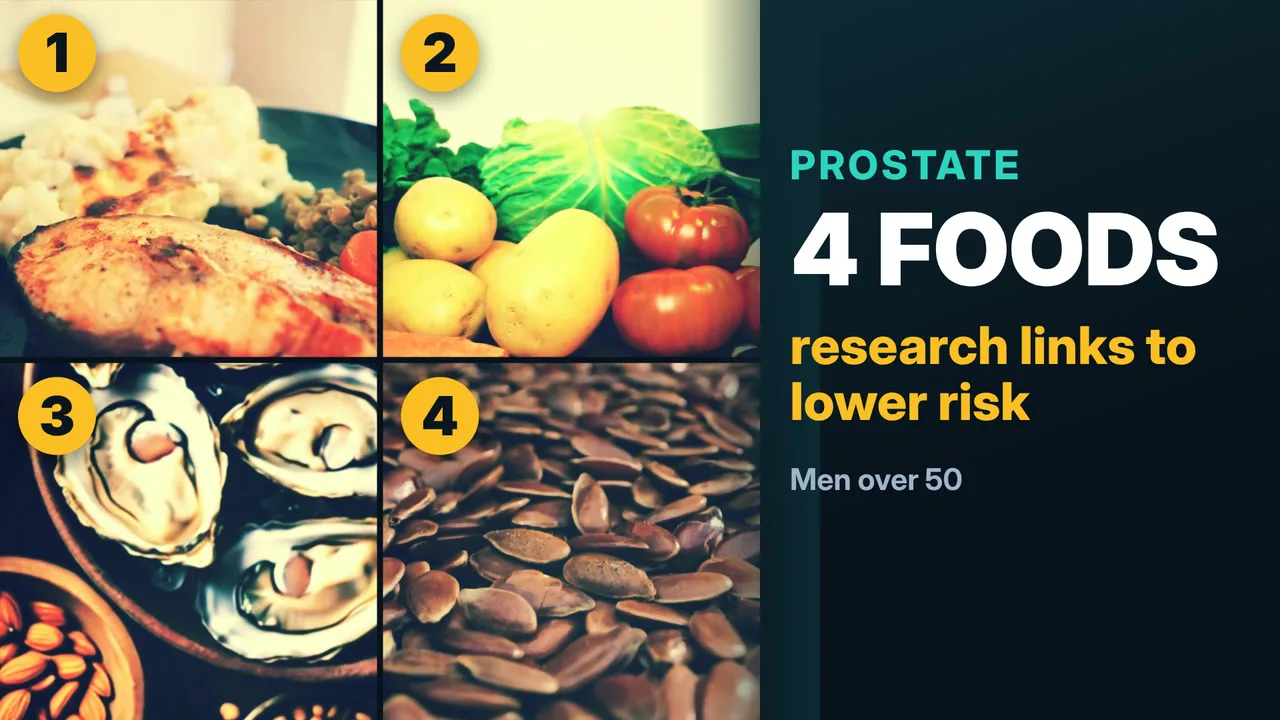
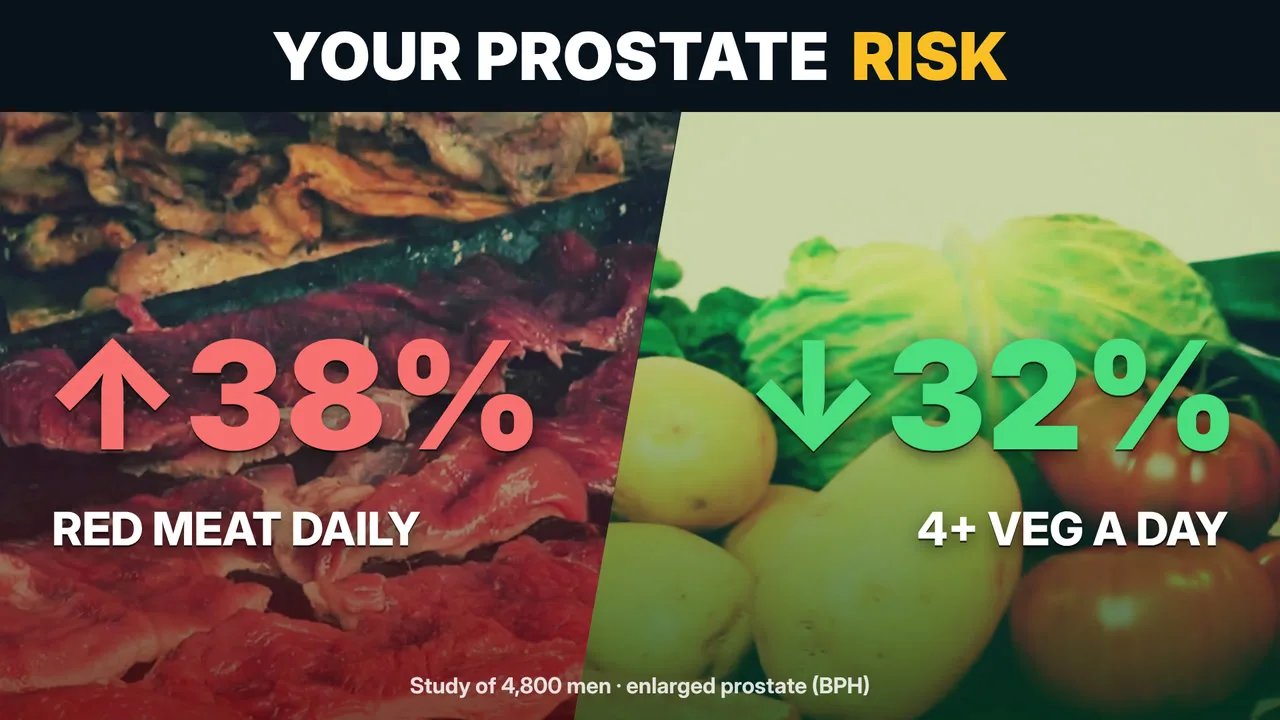
The best-studied foods for prostate health are vegetables (4+ servings a day), lean protein, zinc-rich foods and ground flaxseed. In a 7-year study of about 4,800 men, eating plenty of vegetables was linked to a 32% lower risk of an enlarged prostate (BPH), while eating red meat every day was linked to a 38% higher risk. These foods may support prostate health, but no food has been shown to prevent, shrink or cure BPH.
Who this guide is for: men 50+ and their families who want practical, evidence-checked food choices for an enlarged prostate (BPH). It is not a guide to treating prostate cancer.
In this guide
- What is an enlarged prostate?
- BPH vs prostate cancer
- Can food really make a difference?
- Food 1: Lean protein
- Food 2: Vegetables
- Food 3: Zinc-rich foods
- Food 4: Ground flaxseed
- Evidence at a glance
- What to limit
- A prostate-friendly day of eating
- Your daily prostate-plate checklist
- Daily habits that ease symptoms
- When to see a doctor
- Myths vs facts
- FAQs
- References
What is an enlarged prostate (BPH)?
An enlarged prostate is a non-cancerous growth of the prostate gland. Doctors call it benign prostatic hyperplasia (BPH). “Benign” means it is not cancer.
The prostate is a walnut-sized gland that sits just below the bladder. It wraps around the urethra, the tube that carries urine out of the body. Most men’s prostate keeps growing slowly with age. When it grows large enough, it can squeeze the urethra, much like a hand pressing on a garden hose.
Common symptoms of BPH
- A weak, slow or interrupted urine stream
- Needing to urinate often, especially at night (nocturia)
- A sudden, hard-to-delay urge to urinate
- Trouble starting to urinate, or dribbling at the end
- Feeling that the bladder hasn’t fully emptied
How common is it?
Very common. According to the U.S. National Institute of Diabetes and Digestive and Kidney Diseases (NIDDK), BPH affects about half of men aged 51–60 and up to 90% of men over 80 [1]. Age is the main driver, which is why diet and lifestyle are worth a closer look.
Is an enlarged prostate the same as prostate cancer?
No. BPH is a non-cancerous enlargement, and having BPH does not appear to raise your risk of prostate cancer [1]. But the two can cause similar urinary symptoms and can exist together, so new symptoms always deserve a check-up.
The food evidence in this guide is about BPH. Diet is not a substitute for prostate cancer screening. A PSA blood test is a personal decision: the CDC advises men to talk with their doctor about its benefits and risks, especially men at higher risk, such as those with a close family history of prostate cancer [10].
Can food really make a difference?
Food can’t reverse an enlarged prostate. But large studies show that men who eat in certain ways are less likely to develop bothersome BPH symptoms. It helps to know what kind of evidence sits behind each claim:
| Type of study | What it can tell us | Used in this guide for |
|---|---|---|
| Observational study (follows thousands of people over years) | Which eating habits are linked to higher or lower risk. It can’t prove cause and effect. | Protein, vegetables, red meat, fat, zinc |
| Randomized controlled trial (people randomly given a treatment or placebo) | Whether something causes an effect. Small trials still need confirmation. | Flaxseed lignan extract, saw palmetto |
| Official guidance (NIH, NIDDK, MedlinePlus) | Safe intake levels and recommended habits | Zinc limits, lifestyle tips, warning signs |
The most useful single source is the Prostate Cancer Prevention Trial (PCPT) analysis. Researchers followed 4,770 men who had no BPH at the start for 7 years and compared their diets with who developed symptomatic BPH [2].
1Lean protein
Evidence: one large observational studyMen who ate the most protein had about a 15% lower risk of symptomatic BPH than men who ate the least [2]. The same study found the opposite pattern for fat: the highest total-fat intake was linked to a 31% higher risk.
The practical message is to get your protein from lean sources rather than fatty meats. Fish, poultry, eggs, beans, lentils and chickpeas all count. Plant proteins such as lentils and chickpeas also bring fibre, which helps prevent constipation. Constipation can press on the bladder and make urinary symptoms worse.
How to eat it: include a palm-sized portion of lean protein at each main meal. Good choices are grilled or baked fish, chicken without skin, eggs, daal (lentils), chana (chickpeas) and beans. Not sure how much you need? Read our guide: How much protein do you need?
2Vegetables
Evidence: most consistent of the fourIn the PCPT, men who ate four or more servings of vegetables a day had a 32% lower risk of BPH than men who ate less than one serving [2].
A separate Harvard analysis of more than 24,000 men in the Health Professionals Follow-up Study pointed the same way. Vegetables rich in beta-carotene, lutein and vitamin C were linked to lower rates of BPH, and more vitamin C from food was linked to lower odds of BPH [3].
Notice the pattern: the benefit came from food. In the PCPT, antioxidant supplements were not linked to a lower risk [2].
| Nutrient studied | Everyday sources |
|---|---|
| Beta-carotene | Carrots, sweet potato, pumpkin, spinach |
| Lutein | Spinach, kale, methi (fenugreek leaves), mustard greens (saag), broccoli |
| Vitamin C | Bell peppers, tomatoes, broccoli, cauliflower, cabbage |
How to eat it: aim for 4 or more servings a day. One serving is about 1 cup of raw leafy greens or ½ cup of cooked vegetables. The easy rule: fill half your plate with vegetables at lunch and dinner.
3Zinc-rich foods
Evidence: weak and limitedHealthy prostate tissue holds unusually high levels of zinc, which is why researchers study this mineral. However, the evidence linking zinc to a lower BPH risk is weak: the PCPT found only weak evidence of a link [2].
The sensible approach is to make sure you get enough zinc from food. Adult men need 11 mg a day [5].
| Food | Serving | Zinc | Share of a man’s daily 11 mg |
|---|---|---|---|
| Oysters, Pacific, cooked | 3 oz (85 g) | 28 mg | Over 250% |
| Beef, lean sirloin, roasted | 3 oz (85 g) | 3.8 mg | About 35% |
| Pumpkin seeds, dried | 1 oz (28 g) | 2.2 mg | About 20% |
| Cashews, dry-roasted | 1 oz (28 g) | 1.6 mg | About 15% |
| Chickpeas, cooked | ½ cup | 1.3 mg | About 12% |
Values from the NIH Office of Dietary Supplements zinc fact sheet [5]. Zinc content varies by product and variety.
Caution with zinc supplements. The safe upper limit for adults is 40 mg a day from all sources combined [5]. Taking more over long periods can cause copper deficiency. Many multivitamins already contain zinc. Talk to your doctor before taking a zinc supplement. Allergy note: skip oysters if you have a shellfish allergy, and nuts or seeds if you are allergic to them.
4Ground flaxseed
Evidence: one small clinical trial (extract)Flaxseeds are rich in lignans, plant compounds that scientists are studying for their effects on hormones and prostate cells.
In a randomized, double-blind, placebo-controlled trial, 87 men with BPH took a flaxseed lignan extract or a placebo for 4 months [4]. Men taking the extract saw their urinary symptom scores improve from where they started. Their quality-of-life scores also improved, and at the higher dose this improvement was greater than with placebo.
There are limits. The study used a concentrated extract, not whole flaxseed. Urine flow did not improve significantly, and the placebo group also improved somewhat. Larger studies are still needed.
How to eat it: start with 1 tablespoon of ground flaxseed a day, stirred into oatmeal, daliya, yogurt or a smoothie. Ground seeds are easier to digest than whole ones. Drink plenty of water with it, because flaxseed fibre without enough fluid can cause bloating or constipation [7]. Don’t eat raw or unripe flaxseeds [7].
Check with your doctor first if you take blood thinners, blood-pressure medicines or diabetes medicines: flaxseed may add to their effects [8]. Its fibre can also reduce how well oral medicines are absorbed, so take them at a different time of day.
Foods for prostate health: the evidence at a glance
This comparison ranks the four foods for prostate health by strength of evidence and gives one simple daily step for each.
| Food | Best evidence | What was found | Strength | Your daily step |
|---|---|---|---|---|
| Vegetables | PCPT (4,770 men) and Harvard HPFS (24,000+ men) | 4+ servings/day: 32% lower BPH risk | Moderate | Half your plate, 4+ servings |
| Lean protein | PCPT | Most vs. least protein: 15% lower risk | Limited | Lean protein at each meal |
| Ground flaxseed | Small RCT (87 men, extract) | Symptom and quality-of-life scores improved; flow did not | Limited | 1 tbsp ground, with water |
| Zinc-rich foods | PCPT | Only a weak link to lower risk | Weak | Meet 11 mg/day from food |
What to limit: red meat and high-fat foods
Men who ate red meat every day had a 38% higher risk of BPH than men who ate it less than once a week [2]. The highest intake of total fat was linked to a 31% higher risk.
Keep beef, mutton and processed meats as occasional foods rather than daily ones. Choose grilling, baking or steaming over deep-frying. For help telling healthier fats from less healthy ones, see Is fat bad for you? Good vs. bad fats.
A note on alcohol: the same study linked moderate drinking with lower BPH risk. Alcohol has other well-known health risks and can worsen urinary symptoms at night, so we don’t recommend drinking for prostate health.
A prostate-friendly day of eating
Here is how the four foods fit into one ordinary day, with a global and a South Asian option for each meal. Swap freely and keep the pattern.
| Meal | Global option | South Asian option | Foods covered |
|---|---|---|---|
| Breakfast | Oatmeal with 1 tbsp ground flaxseed and berries | Daliya (cracked-wheat porridge) with 1 tbsp ground flaxseed | Flaxseed |
| Lunch | Grilled chicken salad with spinach, peppers, tomatoes and chickpeas | Daal, mixed-vegetable sabzi, whole-wheat roti and kachumber salad | Protein, vegetables, zinc |
| Snack | 1 oz pumpkin seeds and carrot sticks | Roasted chana or a small handful of pumpkin seeds, with fruit | Zinc, vegetables |
| Dinner | Baked fish with steamed broccoli and roasted tomatoes | Fish or chicken salan with saag and brown rice | Protein, vegetables |
| Evening | Drink most of your fluids earlier in the day; cut back in the last couple of hours before bed | Fewer night-time trips | |
Tracking portions? Try the AI Heelth Food Calorie Calculator. To check whether you’re at a healthy weight, use the BMI Calculator.
Your daily prostate-plate checklist
Tick what you managed today. It works on your phone and prints neatly for the fridge. Nothing is saved or sent anywhere.
Daily habits that ease urinary symptoms
Alongside diet, these habits are recommended by the U.S. National Library of Medicine (MedlinePlus), based on NIDDK guidance [6]:
- Avoid alcohol and caffeine, especially after dinner. Both can increase the need to urinate.
- Urinate when you first feel the urge, and try going on a regular schedule.
- Be careful with cold and sinus medicines. Over-the-counter products with decongestants or antihistamines can make symptoms worse. Ask a pharmacist for alternatives.
- Stay active and keep a healthy weight.
- Don’t stop or change prescribed medicines on your own. Some medicines, such as diuretics, can affect urination, so ask your doctor first.
When to see a doctor
See a doctor about any new or worsening urinary symptoms. BPH symptoms can overlap with other conditions, including infections and prostate cancer, so a proper check matters.
Get medical care right away if you:
- Suddenly can’t urinate at all
- See blood in your urine
- Have painful, frequent urination with fever or chills
- Have severe pain in your lower belly or urinary tract
Source: NIDDK [1].
Myths vs facts
| Myth | Fact |
|---|---|
| “Certain foods can shrink an enlarged prostate.” | No food has been shown to shrink the prostate or cure BPH. Research links some eating patterns with a lower risk of symptoms. |
| “Saw palmetto is proven to relieve BPH.” | Two large NIH-funded trials found saw palmetto worked no better than a placebo for BPH symptoms [9]. |
| “More zinc means a healthier prostate.” | The link is weak. Above 40 mg a day, zinc can cause copper deficiency [5]. |
| “Antioxidant pills work as well as vegetables.” | In the PCPT, antioxidant supplements were not linked to lower risk; vegetables were [2]. |
| “Drinking much less water will fix night-time urination.” | Stay hydrated during the day. Cutting fluids in the evening and limiting caffeine and alcohol is what helps [6]. |
Key takeaways
- Vegetables have the most consistent evidence: aim for 4+ servings a day, half your plate.
- Lean protein from fish, poultry, eggs, beans and lentils is linked to lower BPH risk.
- Zinc: get 11 mg a day from food, and avoid high-dose supplements unless your doctor advises them.
- Ground flaxseed is promising but early: 1 tablespoon a day, with water.
- Limit daily red meat and high-fat foods.
- Food can support prostate health but can’t prevent or cure BPH. Discuss any urinary symptoms with a qualified healthcare professional.
Frequently asked questions
What is the best food for an enlarged prostate?
Vegetables have the strongest evidence. In a 7-year study of 4,770 men, eating 4 or more servings a day was linked to a 32% lower risk of symptomatic BPH. Lean protein, zinc-rich foods and ground flaxseed may also help, but no single food treats BPH.
Can diet shrink an enlarged prostate?
No. No food or diet has been shown to shrink the prostate or reverse BPH. A healthy diet is linked to a lower risk of developing symptoms and supports overall health. Treatment for existing BPH should be discussed with a doctor.
Is red meat bad for the prostate?
Eating red meat every day was linked to a 38% higher risk of BPH than eating it less than once a week in the Prostate Cancer Prevention Trial. That is an association, not proof, but keeping red meat as an occasional food is a sensible choice.
How much flaxseed should I eat for prostate health?
There is no established dose for prostate health. A common, practical amount is 1 tablespoon of ground flaxseed a day with plenty of water. The only BPH trial used a concentrated lignan extract, so results from whole flaxseed may differ.
Should I take zinc supplements for my prostate?
Not without your doctor’s advice. Evidence for zinc and BPH is weak. Adult men need 11 mg a day, which food can easily provide, and long-term intake above 40 mg a day can cause copper deficiency.
Is an enlarged prostate the same as prostate cancer?
No. BPH is a non-cancerous enlargement of the prostate and does not appear to raise prostate cancer risk. The two can cause similar urinary symptoms, so any new symptoms should be checked by a doctor. Talk with your doctor about whether PSA screening is right for you.
Are tomatoes, green tea or pomegranate good for the prostate?
These foods are often promoted for prostate health, mainly on the basis of prostate cancer research, and the results are mixed. They are healthy choices within a vegetable-rich diet, but no good-quality study shows that they prevent or treat an enlarged prostate.
Does saw palmetto work for BPH?
Large, high-quality NIH-funded trials found saw palmetto was no more effective than a placebo for BPH urinary symptoms, even at three times the usual dose.
When should I see a doctor about urinary symptoms?
See a doctor about any new or worsening urinary symptoms. Get care right away if you can’t urinate, see blood in your urine, or have painful urination with fever or chills, or severe lower-belly pain.
References
- National Institute of Diabetes and Digestive and Kidney Diseases. Enlarged Prostate (Benign Prostatic Hyperplasia).
- Kristal AR, Arnold KB, Schenk JM, et al. Dietary patterns, supplement use, and the risk of symptomatic benign prostatic hyperplasia: results from the Prostate Cancer Prevention Trial. Am J Epidemiol. 2008;167(8):925-34. doi:10.1093/aje/kwm389
- Rohrmann S, Giovannucci E, Willett WC, Platz EA. Fruit and vegetable consumption, intake of micronutrients, and benign prostatic hyperplasia in US men. Am J Clin Nutr. 2007;85(2):523-9. doi:10.1093/ajcn/85.2.523
- Zhang W, Wang X, Liu Y, et al. Effects of dietary flaxseed lignan extract on symptoms of benign prostatic hyperplasia. J Med Food. 2008;11(2):207-14. doi:10.1089/jmf.2007.602
- NIH Office of Dietary Supplements. Zinc: Fact Sheet for Health Professionals.
- MedlinePlus, U.S. National Library of Medicine. Enlarged prostate – what to ask your doctor / self-care.
- National Center for Complementary and Integrative Health. Flaxseed and Flaxseed Oil.
- Mayo Clinic. Flaxseed and flaxseed oil.
- National Center for Complementary and Integrative Health. Saw Palmetto; Barry MJ, et al. JAMA. 2011;306(12):1344-51. doi:10.1001/jama.2011.1364
- Centers for Disease Control and Prevention. Should I Get Screened for Prostate Cancer?
Medical disclaimer: This article is for general education and is not medical advice, diagnosis or treatment. Diet may support prostate health but cannot prevent, reverse or cure BPH. Always talk to a qualified healthcare professional about urinary symptoms and before changing your diet, starting supplements, or stopping any medicine, especially if you have food allergies or take blood thinners, blood-pressure or diabetes medicines.
© 2026 AI Heelth. Written by the AI Heelth Editorial Team; evidence checked against the sources above and last reviewed on November 1, 2026. Illustrations created for AI Heelth. Spotted an error? Let us know through our contact page and we will review it.