Quick answer: what are the liver warning signs?
The clearest liver warning signs are yellow skin or yellow whites of the eyes (jaundice), dark tea-coloured urine with pale or clay-coloured stools, and a steadily swelling belly (ascites). Itching without a rash, lasting tiredness, swollen ankles and discomfort under the right ribs or in the right shoulder can also be clues, but each has many other causes. Early liver disease usually causes no symptoms at all, so if you have diabetes, excess weight, regular alcohol use or a hepatitis risk, a simple blood test and a FIB-4 score tell you more than waiting for signs. New jaundice needs a doctor the same day.
Key takeaways
- Strongest signs: jaundice, pale stools with dark urine, and fluid in the abdomen.
- Common but non-specific: fatigue, itching and swollen ankles. Worth checking, not proof of liver disease.
- Weak link: new food or pollen allergies. There is little evidence liver problems cause them.
- Silent risk: fatty liver disease (now called MASLD) affects roughly 1 in 3 adults worldwide and is usually silent until scarring is advanced.
- New in 2024–2025: the first medicines for fatty-liver inflammation with scarring (resmetirom and semaglutide) were approved in the US, so early detection matters more than ever.
- Free tool below: check your symptoms, your risk factors and your FIB-4 liver-scarring score in one place.
The 10 liver warning signs at a glance
Most symptom lists treat every sign as equally important. They aren’t. The table below rates each of the 10 liver warning signs by how strongly it actually points to the liver, so you can decide how quickly to act. It is a guide for that decision, not a way to diagnose yourself.
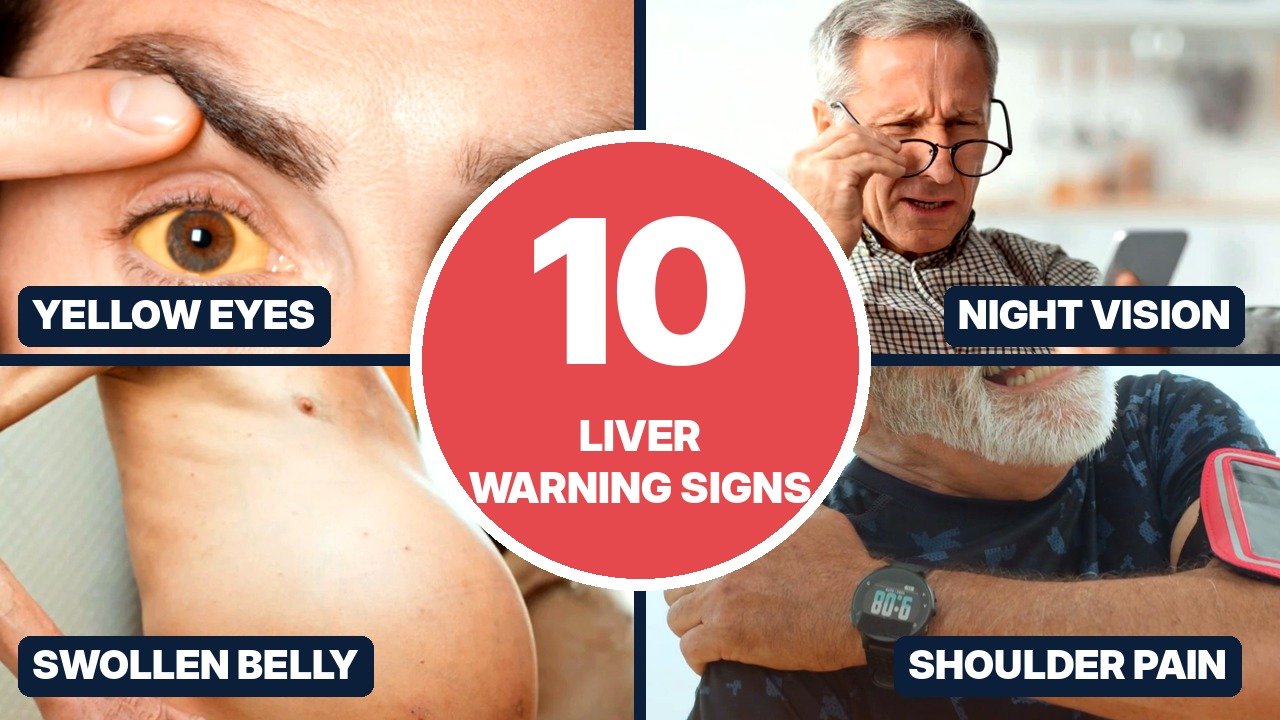
| # | Sign | What you may notice | Link to the liver | Sensible next step |
|---|---|---|---|---|
| 1 | Bronze skin / iron overload | Darker, bronze or grey skin, joint aches, tiredness. Often no symptoms. | Specific condition | Ask for ferritin and transferrin saturation |
| 2 | Xanthelasma | Soft yellow patches on or near the eyelids | Possible clue | Lipid profile; liver tests if other signs |
| 3 | Jaundice | Yellow whites of the eyes, then yellow skin | Strong | See a doctor the same day if new |
| 4 | Stool & urine changes | Pale or clay stools, dark urine, greasy floating stools | Strong (diarrhea alone: weak) | Doctor’s appointment soon |
| 5 | Itching | Itch without a rash, often palms and soles, worse at night | Moderate | Mention it, especially with other signs |
| 6 | Poor night vision | Trouble driving at night or adjusting to dim light | Possible clue | Eye check first. Don’t self-dose vitamin A. |
| 7 | Allergy-like reactions | New food or pollen reactions | Weak evidence | Doctor or allergist |
| 8 | Swollen belly & legs | Growing waist, tight belly, ankles that dent when pressed | Strong (belly) / Moderate (legs) | See a doctor promptly |
| 9 | Right shoulder pain | Shoulder-tip ache with upper-right belly discomfort | Possible clue | Doctor review if not a clear muscle strain |
| 10 | Fatigue | Exhaustion that rest doesn’t fix, brain fog | Common, non-specific | Basic blood tests incl. liver tests |
Sources: British Liver Trust; AAFP; StatPearls; MSD Manual; AASLD (see references). Evidence checked: November 2026.
Bronze skin and iron overload (hemochromatosis)
The old nickname “bronze diabetes” describes a late stage of hereditary hemochromatosis, an inherited condition in which the gut absorbs more iron than the body needs. Over many years the surplus is stored in the liver, pancreas, heart and joints. The skin can turn bronze or slate-grey, and damage to the pancreas can trigger diabetes.
By the time skin changes colour, iron has usually been building for decades. The genetic form is common in people of northern European ancestry (roughly 1 in 200 to 300 carry two copies of the main gene change), yet most of them never develop symptoms. It is rare in people of South Asian, East Asian and African ancestry, but iron overload can still happen for other reasons, such as repeated blood transfusions in thalassaemia.
How it’s actually diagnosed: doctors check ferritin and transferrin saturation together, then confirm with a genetic test. Ferritin alone isn’t enough because it also rises with inflammation, alcohol and fatty liver disease. Treatment is regular, doctor-supervised blood removal (venesection), not casual blood donation.
Ask about testing if: a parent, brother or sister has hemochromatosis; your liver enzymes are raised without a clear reason; or you have joint pain, tiredness and darkening skin together.
Yellow patches near the eyes (xanthelasma)
Xanthelasma are soft, flat, yellowish patches on or around the eyelids, most often near the inner corner. They are cholesterol-rich deposits under the skin. They don’t hurt and aren’t dangerous in themselves, but they can be a visible marker of something underneath.
The honest picture: xanthelasma usually points to blood fats, not the liver. About half of people who have them have abnormal lipid levels. The liver link is with cholestatic diseases, where bile flow is reduced. The best known is primary biliary cholangitis (PBC), an autoimmune condition that mainly affects women in midlife and often raises cholesterol.
Sensible step: ask for a lipid profile. If you also have itching, tiredness or abnormal liver tests, ask whether a liver cause should be ruled out.
Jaundice: yellow eyes and skin
Jaundice is the best-known liver warning sign. It happens when bilirubin, a yellow pigment made when old red blood cells are recycled, builds up in the body. A healthy liver processes bilirubin and sends it out in bile, which is what makes stool brown. If the liver is inflamed, or bile can’t drain, bilirubin backs up into the blood.
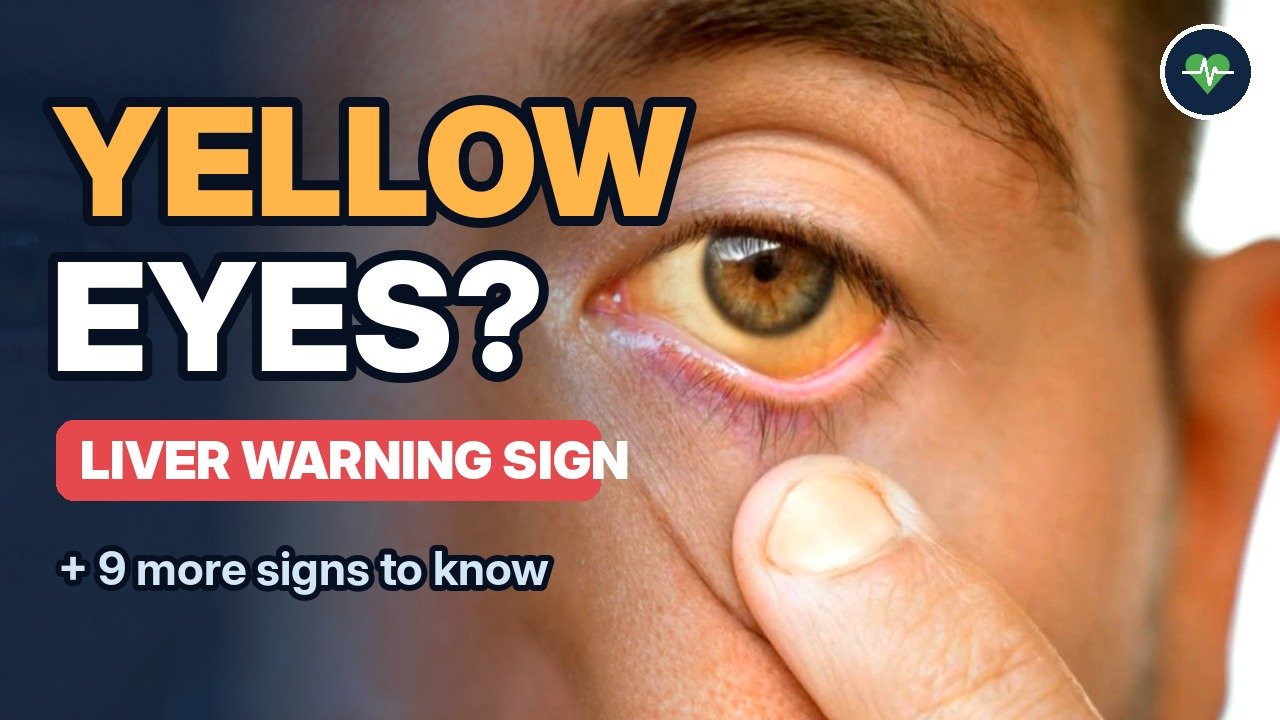
Yellowing spreads from the eyes to the face and then the body. Causes range from short-lived and treatable (a gallstone blocking a bile duct, hepatitis A, some medicines) to serious liver disease. A harmless inherited pattern called Gilbert’s syndrome can cause mild, on-and-off yellow eyes during illness or fasting. Nobody can tell these apart by looking, which is why new jaundice always needs blood tests.
Don’t wait: if your skin or the whites of your eyes turn yellow and this is new for you, get a same-day medical appointment. Go to emergency care if you also have confusion, drowsiness, fever or severe belly pain.
Changes in stools and urine
When bile doesn’t reach the gut, stools lose their brown colour and turn pale, grey or clay-coloured. The excess bilirubin leaves through the kidneys instead, turning urine dark, like strong tea or cola. Too little bile also means fat isn’t digested well, so stools may become greasy, foul-smelling and hard to flush (steatorrhea).
Diarrhea on its own is a different matter: infections, food intolerances and medicines are far more common causes, so it isn’t a reliable liver sign. Black, tarry stools are different again. They can mean bleeding in the gut, which in advanced liver disease may come from swollen veins in the food pipe (varices), and need emergency care.
Itching without a rash (pruritus)
Liver-related itch, called cholestatic pruritus, has a recognisable pattern:
- it often starts on the palms of the hands and soles of the feet, though it can spread everywhere;
- it tends to be worse in the late evening and at night and can wreck sleep;
- there is usually no rash or hives, although scratching can leave marks.
Bile acids and other substances that build up when bile flow slows are thought to play a part, but the exact mechanism is still debated. Oddly, how badly someone itches doesn’t track how severe their liver disease is. Itching is also very common for other reasons, including dry skin in older adults, eczema, thyroid and kidney problems, and medicines. That’s why it rates as a moderate clue rather than a strong one. Antihistamines often don’t help liver itch, and specific treatments exist, so it’s worth raising with your doctor.
Poor night vision
The retina needs vitamin A to make rhodopsin, the pigment that lets you see in dim light. The liver stores vitamin A, and bile is needed to absorb it from food. In long-standing liver disease, especially with poor bile flow, vitamin A can run low, and night blindness is often the first symptom of that deficiency.
Keep it in proportion: night blindness from liver disease is uncommon and mostly seen in advanced disease. After 40, trouble seeing at night is far more often caused by cataracts, an out-of-date prescription, glaucoma or diabetic eye disease. Start with an eye examination.
Safety warning: don’t treat poor night vision with vitamin A supplements on your own. Excess vitamin A is stored in the liver and can cause scarring and liver injury. People with liver disease are usually told to avoid supplements that contain it unless a doctor prescribes and monitors them.
Allergy-like reactions: the weakest link
Many online lists, and the script of our own video, repeat the idea that a “congested” or “toxic” liver makes the immune system overreact, causing new food sensitivities or worse hay fever. We could not find good scientific evidence for this, so we rate it the weakest of the 10 liver warning signs. New or worsening allergies have many established causes and deserve their own assessment.
What is true: liver itch can be mistaken for an allergy, but it usually comes without the hives, redness and swelling of an allergic reaction. If you itch with no rash, especially on the palms and soles, tell your doctor (see sign 5).
Practical step: keep a simple food and symptom diary and ask about allergy testing. Get emergency help for swelling of the lips, tongue or throat, or difficulty breathing.
Swollen belly and legs (ascites and edema)
Ascites is fluid collecting inside the abdomen. The belly gets bigger and tighter, trousers stop fitting, weight climbs even though appetite falls, and breathing can feel short when lying down. Cirrhosis is the most common cause. Two things drive it: raised pressure in the liver’s blood supply (portal hypertension) and low albumin, a protein the liver makes that holds fluid inside blood vessels. Edema, swelling of the ankles and legs that leaves a dent when pressed, often appears alongside it.
Swollen ankles alone are very common and usually come from heart, kidney or vein problems, long hours sitting, heat, or medicines such as amlodipine. A steadily growing belly, especially with jaundice or tiredness, needs prompt assessment. A swollen belly with fever or new pain can mean the fluid is infected and needs urgent care.
Right shoulder pain
The liver sits right under the diaphragm. The diaphragm’s nerve (the phrenic nerve) enters the spinal cord at the same level as nerves from the shoulder, so irritation near the liver or gallbladder can be “referred” and felt in the right shoulder tip, shoulder blade or neck. The British Liver Trust lists right shoulder pain among possible symptoms of liver disease.
Most shoulder pain still comes from muscles, tendons or joints. Pain that worsens with movement and eases with rest is usually mechanical. Shoulder pain with upper-right belly pain, nausea, fever or jaundice, or that starts after fatty meals, more often points to the gallbladder and should be checked. Left shoulder or arm pain with chest discomfort or breathlessness can be a heart attack: call emergency services.
Fatigue that rest doesn’t fix
Fatigue is one of the most common symptoms of chronic liver disease, and in some conditions it is the main complaint. In primary biliary cholangitis it is reported by up to 80% of patients. People describe a heavy, persistent exhaustion with brain fog, rather than ordinary end-of-day tiredness.
It is also one of the least specific symptoms in medicine. Anaemia, thyroid problems, diabetes, poor sleep or sleep apnoea, low mood, vitamin B12 or D deficiency and medicines are far more common causes. Treat it as a reason to see your doctor and get basic blood tests, which can include liver tests, not as proof of a liver problem. If you also carry weight around the middle, the warning signs of insulin resistance often overlap with fatty liver.
Free liver health checker: symptoms, risk factors and FIB-4 score
Three quick tools in one. Nothing you enter is saved or sent anywhere. This is not a diagnosis; it helps you decide how soon to talk to a doctor and what to ask for.
Tick anything that’s new or has lasted more than two weeks.
Most liver disease is found through risk factors, not symptoms. Tick any that apply to you.
FIB-4 estimates the chance of advanced liver scarring from four numbers on a routine blood report. Doctors use it as the first screening step for fatty liver disease. Use results from the same blood test.
Formula: FIB-4 = (age × AST) ÷ (platelets × √ALT). Cut-offs follow AASLD 2023 guidance: below 1.3 (below 2.0 if 65 or older) = low risk; 1.3 to 2.67 = indeterminate; above 2.67 = high risk.
Which tests check for liver problems?
Because liver disease is often silent early on, blood tests and scans find far more problems than symptoms do. Here’s what a doctor may suggest; you can take this list to your appointment.
| Test | What it checks | Often used when |
|---|---|---|
| Liver blood tests (LFTs): ALT, AST, ALP, GGT, bilirubin, albumin | Liver-cell irritation, bile flow, and how well the liver makes protein | First step for almost any liver concern |
| Full blood count & clotting (INR) | Platelets and clotting, which fall or change in advanced disease | Abnormal LFTs, bruising, suspected cirrhosis |
| FIB-4 score | Estimated risk of advanced scarring (age, AST, ALT, platelets) | Diabetes, obesity, metabolic risk factors, fatty liver on ultrasound |
| FibroScan (transient elastography) or ELF blood test | Liver stiffness / scarring, without a needle | FIB-4 of 1.3 or more, or chronic liver disease follow-up |
| Hepatitis B & C tests (HBsAg, anti-HCV) | Viral infection of the liver | Everyone at least once as an adult; abnormal LFTs; risk factors |
| Ferritin + transferrin saturation | Iron stores and iron loading | Suspected hemochromatosis or unexplained raised enzymes |
| Lipid profile, HbA1c | Cholesterol and blood sugar, the metabolic drivers of fatty liver | Xanthelasma, excess weight, diabetes, high blood pressure |
| Ultrasound scan | Liver size and texture, fat, bile ducts, fluid, lumps | Jaundice, abnormal LFTs, swollen abdomen; every 6 months in cirrhosis |
Sources: AASLD 2023 practice guidance; American Diabetes Association; WHO; AAFP. Availability varies by country and clinic.
Fatty liver has a new name: MASLD
Since 2023, international liver societies use MASLD (metabolic dysfunction-associated steatotic liver disease) instead of “non-alcoholic fatty liver disease (NAFLD)”. The inflamed, scarring form is MASH. If fat in the liver comes with moderate alcohol use as well, doctors may write MetALD. MASLD is linked to excess weight, type 2 diabetes, high blood pressure and high cholesterol, and it often improves when those are treated. Losing about 5–10% of body weight is linked to less liver fat and, at the higher end, less inflammation and scarring.
Treatment update: in March 2024 the US FDA approved resmetirom, and in August 2025 semaglutide 2.4 mg, for adults with MASH and moderate-to-advanced scarring (not cirrhosis), alongside diet and activity changes. These are specialist prescriptions with eligibility rules and side effects; they are not “liver supplements”. Ask a liver specialist whether they suit you.
Why liver checks matter more in Pakistan and South Asia
If you live in Pakistan or have South Asian heritage, two risks deserve special attention:
- Hepatitis C: the WHO’s 2024 Global Hepatitis Report estimated that Pakistan has the largest number of people living with hepatitis C in the world, about 8.8 million, and linked a large share of new infections to unsafe injections. Many people have no symptoms for years. Modern tablet treatment cures most people in about 12 weeks, so a one-time anti-HCV blood test is one of the most valuable checks you can have.
- Fatty liver at lower weights: people of South Asian heritage tend to develop metabolic problems at a lower BMI, which is why screening advice uses a BMI of 23 or more rather than 25. Diets high in refined carbs, sugary drinks and fried foods add to the risk. Our guides to good vs bad carbs and good vs bad fats explain practical swaps, and you can check your weight category with our BMI calculator.
When to get urgent medical help
Seek urgent care the same day, or call your local emergency number, if you notice:
- yellow skin or yellow whites of the eyes that are new for you;
- vomiting blood, or black, tarry stools;
- confusion, unusual sleepiness, slurred speech or difficulty staying awake;
- a swollen abdomen with fever, chills or new abdominal pain;
- severe abdominal pain that stops you keeping still;
- you have taken more paracetamol (acetaminophen) than the label allows, even if you feel well.
Emergency numbers: Pakistan 1122 / 115 · India 112 · UAE 998 · UK 999 (non-urgent: NHS 111) · US 911 · EU 112.
| Symptom | Common causes that aren’t the liver |
|---|---|
| Fatigue | Anaemia, thyroid problems, diabetes, sleep apnoea, low mood, B12 or vitamin D deficiency, medicines |
| Itching | Dry skin, eczema, allergies, kidney disease, thyroid problems, medicines |
| Swollen ankles | Heart failure, kidney disease, varicose veins, long sitting, heat, some blood-pressure medicines |
| Right shoulder pain | Rotator-cuff strain, frozen shoulder, arthritis, neck problems, gallbladder disease |
| Poor night vision | Cataracts, outdated glasses, glaucoma, diabetic eye disease |
| Xanthelasma | Inherited high cholesterol or other lipid disorders; sometimes no cause at all |
| Mild yellow eyes on and off | Gilbert’s syndrome (harmless), breakdown of red blood cells |
How can you protect your liver after 40?
- Know your numbers: weight, waist, blood sugar, blood pressure and cholesterol all drive fatty liver. If you have diabetes, see our guide on how to control HbA1c.
- Keep alcohol low or avoid it. The WHO states there is no level of drinking that is completely safe for health; with existing liver disease, avoid it entirely.
- Get tested and vaccinated: a one-time hepatitis C test for every adult, and hepatitis B testing and vaccination if you aren’t protected. Insist on new, sealed needles and razors.
- Be wary of “liver detox” products and high-dose supplements. Some herbal products, bodybuilding supplements and excess vitamin A can injure the liver. Tell your doctor everything you take.
- Use medicines as directed: stay within the label limit for paracetamol (acetaminophen), and ask your doctor for a lower limit if you drink regularly or have liver disease.
- Move more and eat mostly whole foods: regular activity, fewer sugary drinks and more fibre may support a healthier liver. See foods that help you lose fat and how to improve gut health.
- Coffee: plain coffee is linked in observational studies to lower rates of liver scarring, though this doesn’t prove cause and effect.
Check your FIB-4 score Watch AIheelth videos
Liver warning signs: frequently asked questions
What are the first signs of liver damage?
Often there are none. Early liver damage is usually silent and found through routine blood tests. When early symptoms do appear, they tend to be vague: tiredness, feeling generally unwell or mild discomfort under the right ribs. Jaundice, dark urine, pale stools and a swelling belly usually appear later.
What is a FIB-4 score and what is a normal result?
FIB-4 is a free score calculated from your age, AST, ALT and platelet count. Below 1.3 (or below 2.0 if you are 65 or older) means advanced scarring is unlikely. Between 1.3 and 2.67 is indeterminate and usually leads to a FibroScan or ELF test. Above 2.67 suggests a higher risk of advanced scarring and a referral to a liver specialist. It is less reliable under 35.
Can the liver repair itself?
The liver has a remarkable ability to regenerate. Fatty liver and even some scarring can improve when the cause is treated, such as losing weight, stopping alcohol or curing hepatitis C. Advanced scarring (cirrhosis) may not fully reverse, which is why early testing matters.
Which blood test checks the liver?
A liver function test (LFT) panel is the usual first step: ALT, AST, ALP, GGT, bilirubin and albumin. Depending on the results, your doctor may add a platelet count for FIB-4, hepatitis B and C tests, iron studies, an ultrasound or a FibroScan.
Is fatty liver disease serious?
For most people, fatty liver (MASLD) does not progress to cirrhosis, but a minority develop inflammation and scarring, and MASLD also raises the risk of heart disease and type 2 diabetes. The amount of scarring, not the amount of fat, best predicts the outlook, which is why FIB-4 and FibroScan are used.
Is right shoulder pain always a liver problem?
No. Most right shoulder pain comes from muscles, tendons or joints. It’s more concerning when it comes with upper-right belly pain, nausea, fever or jaundice, a pattern that often points to the gallbladder.
Do liver detox drinks or cleanses work?
There’s no good evidence that detox products clean a healthy liver; the liver processes waste on its own. Some herbal supplements, and too much vitamin A, can actually harm it. Speak to a doctor or pharmacist before taking them.
Is hepatitis C common in Pakistan, and can it be cured?
Yes. The WHO estimates Pakistan has the world’s largest number of hepatitis C infections, about 8.8 million people. Most infections can be cured with a 12-week course of antiviral tablets, so every adult should have at least one hepatitis C blood test.
Can you have liver disease with no symptoms?
Yes. Many people have no obvious symptoms until the disease is advanced. If you have type 2 diabetes, excess weight, regular alcohol use or possible hepatitis B or C exposure, ask your doctor about liver tests and a FIB-4 score.
References
- British Liver Trust. Symptoms of liver disease.
- Rinella ME et al. AASLD Practice Guidance on the clinical assessment and management of NAFLD/MASLD. Hepatology. 2023.
- AASLD. New MASLD nomenclature (2023).
- American Diabetes Association. How to screen and diagnose MASLD (2025).
- US FDA. FDA approves treatment for serious liver disease known as MASH (August 2025).
- World Health Organization. Global Hepatitis Report 2024.
- American Family Physician (2021). Hereditary Hemochromatosis.
- StatPearls. Xanthelasma Palpebrarum.
- NHS. Primary biliary cholangitis (PBC): symptoms.
- AASLD Liver Fellow Network. Management of pruritus in cholestatic liver disease.
- NCBI LiverTox. Vitamin A.
- MSD Manual Professional. Ascites.
- Younossi ZM et al. Assessment of fatigue and its impact in chronic liver disease. J Hepatol. 2024.
- Harvard Health Publishing. Fatty liver disease: should you be tested?
Medical disclaimer: This article and checker are for general education only and are not a substitute for professional medical advice, diagnosis or treatment. Always ask your doctor or another qualified health professional about symptoms or before changing medicines or supplements. If you think you have a medical emergency, call your local emergency number immediately.